What are green coffee beans? What are green coffee beans? Did you know
Did you know

What are green coffee beans?

Will Sowerby

Written by Will Sowerby / Views

Published - 27 July 2026

Key takeaways

  • Green coffee beans are the raw, unroasted seeds found inside the coffee cherry.
  • ‘Raw coffee beans’ and ‘green coffee beans’ mean the same thing – the terms are interchangeable.
  • Green beans are pale, hard, and grassy-smelling, and you can’t brew a good cup from them until they’re roasted.
  • Roasting develops the flavours, aromas, and colour we associate with coffee, using heat and a series of chemical reactions.
  • Green coffee keeps for months, which is why coffee travels the world green and gets roasted close to the point of sale.
  • The quality of a green bean is set by the grower and the way the coffee’s processed, long before roasting begins.

Every cup of coffee you’ve ever had began as a green bean.

Before roasting turns them dark and glossy, coffee beans are pale, dense, grassy-smelling seeds that look almost nothing like the ones in your grinder.

Getting to know green coffee is the best way to understand where flavour actually comes from – because most of what you taste is decided long before the beans reach a roaster.

Here’s what green coffee beans are, how they differ from the roasted beans you brew, and why they matter so much to the growers and roasters behind every bag of speciality coffee.

A bag of green coffee in our Haslemere roastery

What are green coffee beans?

Green coffee beans are coffee seeds that haven’t been roasted yet.

It helps to start with the plant. Coffee grows on a shrub, and that shrub produces small fruits called coffee cherries.

Inside each cherry sit two seeds, usually flat against each other – and those seeds are what we call coffee beans.

They’re not actually beans in the botanical sense, but the name has stuck for so long that nobody’s about to change it now.

Once the cherries are ripe, growers pick them and set to work removing the fruit. This step is called processing, and there’s more than one way to do it.

Some growers wash the fruit away with water, some dry the whole cherry in the sun so the seed soaks up sweetness from the pulp, and some sit in between the two.

Each method leaves its own fingerprint on the final flavour, which is one of the reasons two coffees from the same region can taste so different.

After processing, the seeds are dried until they’re stable enough to store and ship. What’s left is green coffee: firm, pale seeds that range from sage to a soft yellow-green depending on the variety and how they were handled.

Hold a handful and they feel dense and hard, more like a dried pulse than anything you’d associate with your morning brew.

Smell them and you’ll get something grassy and vegetal, a bit like fresh hay – none of the roasted, chocolatey aroma comes through until heat does its work.

This is the form coffee takes for most of its journey. A green bean can sit in a warehouse for months without losing much character, which matters enormously for a crop grown thousands of miles from where it’s finally enjoyed.

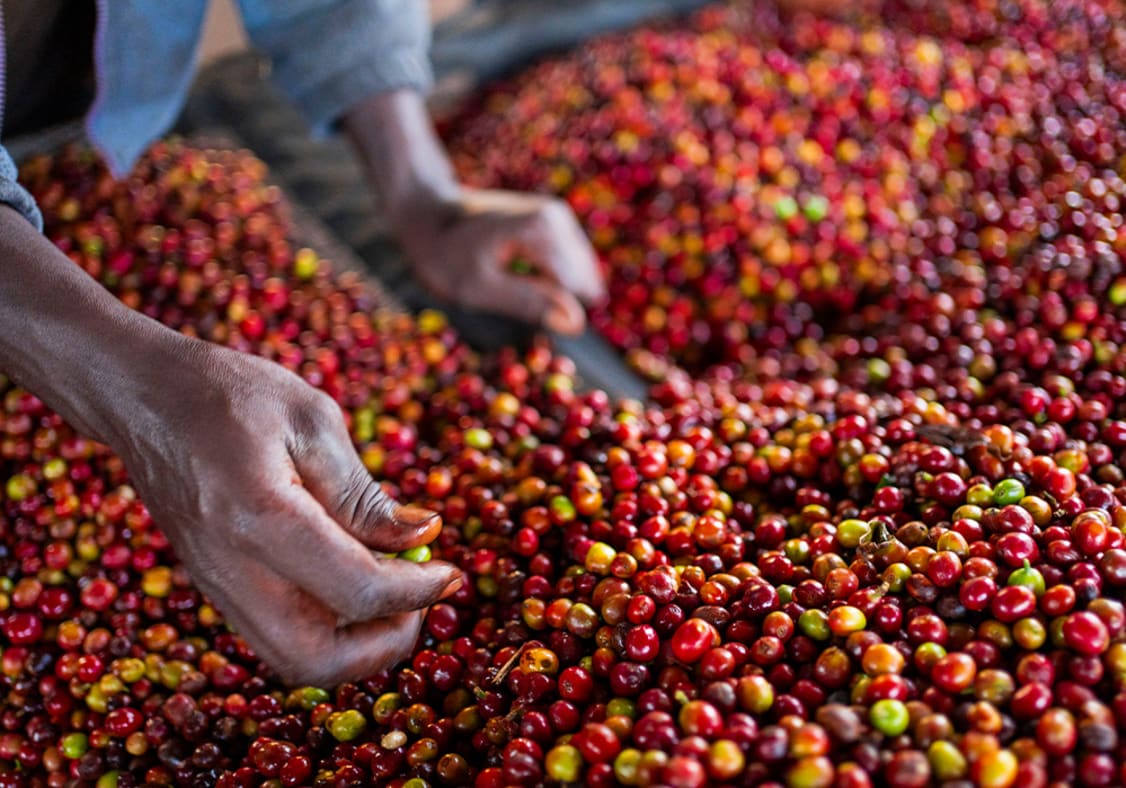
Unprocessed coffee cherries

What are raw coffee beans?

‘Raw coffee beans’ is simply another term for green coffee beans. If you see the two terms used side by side, they’re pointing at exactly the same thing: the unroasted seed of the coffee cherry.

The word ‘raw’ just underlines the key point – these beans haven’t been through the transformation that roasting brings. They’re the coffee in its natural, unprocessed-by-heat state, ready and waiting for a roaster to unlock what’s inside.

You’ll come across a few other names for the same thing, too. ‘Unroasted coffee beans’ is common, and in the trade you’ll hear people talk about ‘green coffee’ as a catch-all. They all mean one thing: coffee that’s been grown, picked, processed, and dried, but not yet roasted.

So if you’ve ever wondered whether raw and green coffee beans are different products, they’re not. It’s the same seed, described two ways.

From green to roasted: what actually changes

Roasting is where green coffee becomes the coffee you recognise, and it’s a genuine transformation rather than a simple colour change.

As the beans heat up, moisture drives off and they begin to expand and lighten. A wave of chemical reactions kicks in – the same browning reactions that give toast and seared meat their flavour – and these build the hundreds of aromatic compounds behind coffee’s taste and smell.

Natural sugars caramelise, acids shift and mellow, and the grassy notes of the green bean give way to the roasted, sweet, sometimes fruity or chocolatey character we’re after.

The beans change physically as well. They swell to a noticeably larger size, turn from pale green to brown, and become brittle enough to grind.

A green bean is far too hard and dense to grind well, and if you tried to brew it, you’d get a thin, vegetal liquid with none of the depth you’d expect.

Timing is everything here. A lighter roast keeps more of the bean’s origin character – its acidity and delicate fruit notes – while a darker roast brings out heavier, more roasty flavours.

This is the roaster’s craft: reading each green coffee and choosing the roast that shows it at its best.

But roasting can only reveal what the grower has already put there. A skilled roaster can’t add flavour that was never in the bean to begin with.

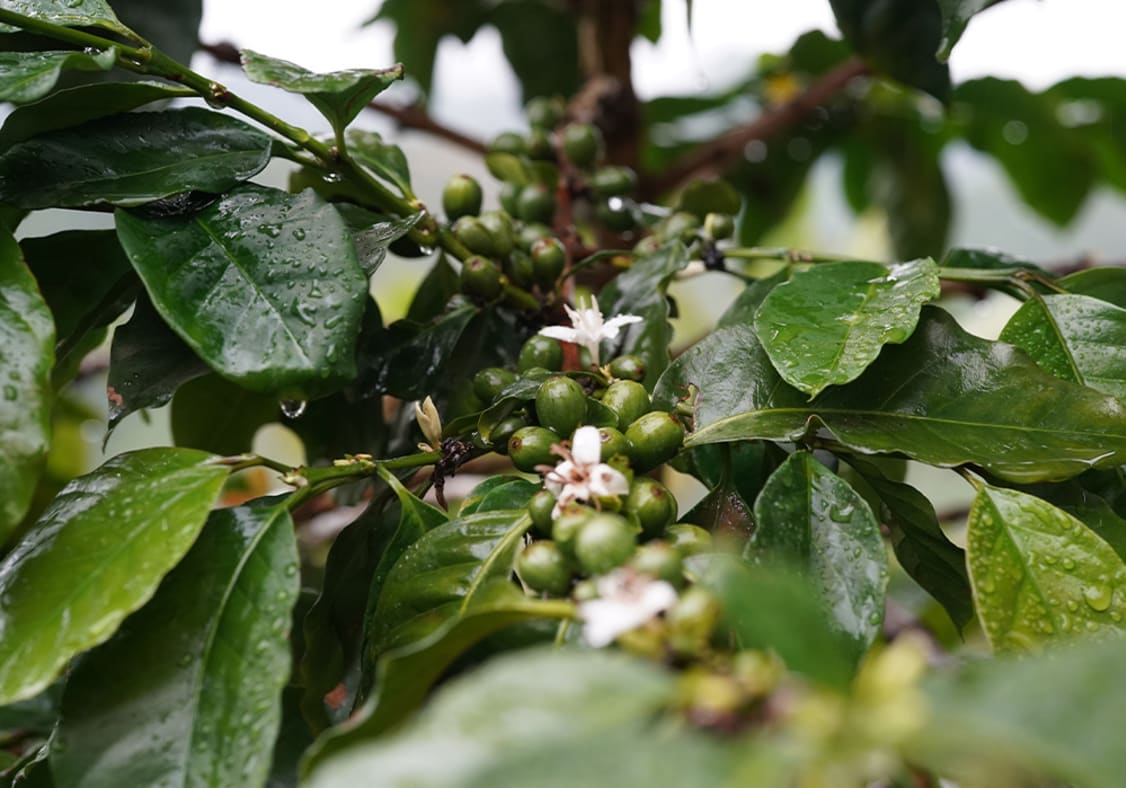
Coffee cherries developing on a coffee tree

Why coffee is shipped and stored green

There’s a practical reason coffee travels the world as green beans rather than roasted ones: freshness.

Roasted coffee is at its best within a few weeks. From the moment it leaves the roaster it starts to lose aroma and flavour, which is why we roast to order and deliver quickly, so nothing’s lost between the grower’s crop and your cup.

Green coffee is a different story. Left unroasted, it stays stable for months, holding its quality through the long journey from a grower’s washing station to a roastery on the other side of the world.

That stability is what makes the whole speciality supply chain possible. Growers can harvest, process, and ship their coffee, and roasters can hold it and roast it fresh, in small batches, close to the point of sale.

Why green coffee quality starts with the grower

It’s tempting to credit the roaster for how a coffee tastes, but the truth is that most of the flavour is locked into the green bean long before it’s roasted.

The variety of coffee, the altitude it’s grown at, the soil, the care taken picking only ripe cherries, and the skill behind the processing all shape the raw material.

Get these right and you’ve got a green coffee full of potential. Get them wrong and no amount of clever roasting will rescue it.

This is why we work directly with the world’s best growers and pay premium prices for premium quality.

It’s a partnership, not a favour – we get access to a rare quality of green coffee, and growers get a fair price and a reason to keep pushing their craft.

That link between grower expertise and what ends up in your cup is the whole point. The better the green bean, the better the coffee.

Want to taste what all that care adds up to? A Pact subscription brings freshly roasted coffee from the world’s best growers straight to your door.

Start your subscription, get 25% off two orders, and taste the difference the green bean makes.

FAQs

Are green coffee beans and raw coffee beans the same thing?

Yes. ‘Green coffee beans’, ‘raw coffee beans’, and ‘unroasted coffee beans’ all describe the same product: the coffee seed after it’s been picked, processed, and dried, but before it’s roasted.

Can you brew green coffee beans?

Not to any good effect. Green beans are too hard and dense to grind properly, and even if you managed it, the result would taste thin, grassy, and vegetal. The flavours we associate with coffee only develop during roasting, so green beans need roasting first.

Can you roast green coffee beans at home?

You can, and some enthusiasts do, using anything from a dedicated home roaster to a pan on the hob.

It takes practice to get an even roast, and it’s easy to scorch a batch, but it’s a good way to appreciate just how much roasting changes the bean. If you’d rather leave it to the experts, that’s what a roastery’s for.

Why are green coffee beans green?

The colour comes from the natural chlorophyll and other compounds in the raw seed.

Roasting breaks these down and triggers browning reactions, which is why the beans darken from green to brown as they roast.

How long do green coffee beans last?

Stored somewhere cool, dry, and out of direct sunlight, green coffee stays in good condition for several months – far longer than roasted coffee, which is best used within a few weeks.

This shelf life is exactly why coffee’s shipped green and roasted fresh.

Is green coffee bean extract the same as green coffee beans?

No – it’s worth clearing this one up. Green coffee bean extract is a supplement made from unroasted beans and sold in capsule or powder form, often marketed for weight management.

The scientific evidence behind those claims is limited and mixed, and it’s a different product entirely from the green coffee we roast and brew.

If you’re considering any supplement, it’s best to speak to a healthcare professional.

What are green coffee beans?

Will Sowerby

Written by Will Sowerby

Views

Published - 27 July 2026

Key takeaways

  • Green coffee beans are the raw, unroasted seeds found inside the coffee cherry.
  • ‘Raw coffee beans’ and ‘green coffee beans’ mean the same thing – the terms are interchangeable.
  • Green beans are pale, hard, and grassy-smelling, and you can’t brew a good cup from them until they’re roasted.
  • Roasting develops the flavours, aromas, and colour we associate with coffee, using heat and a series of chemical reactions.
  • Green coffee keeps for months, which is why coffee travels the world green and gets roasted close to the point of sale.
  • The quality of a green bean is set by the grower and the way the coffee’s processed, long before roasting begins.

Every cup of coffee you’ve ever had began as a green bean.

Before roasting turns them dark and glossy, coffee beans are pale, dense, grassy-smelling seeds that look almost nothing like the ones in your grinder.

Getting to know green coffee is the best way to understand where flavour actually comes from – because most of what you taste is decided long before the beans reach a roaster.

Here’s what green coffee beans are, how they differ from the roasted beans you brew, and why they matter so much to the growers and roasters behind every bag of speciality coffee.

A bag of green coffee in our Haslemere roastery

What are green coffee beans?

Green coffee beans are coffee seeds that haven’t been roasted yet.

It helps to start with the plant. Coffee grows on a shrub, and that shrub produces small fruits called coffee cherries.

Inside each cherry sit two seeds, usually flat against each other – and those seeds are what we call coffee beans.

They’re not actually beans in the botanical sense, but the name has stuck for so long that nobody’s about to change it now.

Once the cherries are ripe, growers pick them and set to work removing the fruit. This step is called processing, and there’s more than one way to do it.

Some growers wash the fruit away with water, some dry the whole cherry in the sun so the seed soaks up sweetness from the pulp, and some sit in between the two.

Each method leaves its own fingerprint on the final flavour, which is one of the reasons two coffees from the same region can taste so different.

After processing, the seeds are dried until they’re stable enough to store and ship. What’s left is green coffee: firm, pale seeds that range from sage to a soft yellow-green depending on the variety and how they were handled.

Hold a handful and they feel dense and hard, more like a dried pulse than anything you’d associate with your morning brew.

Smell them and you’ll get something grassy and vegetal, a bit like fresh hay – none of the roasted, chocolatey aroma comes through until heat does its work.

This is the form coffee takes for most of its journey. A green bean can sit in a warehouse for months without losing much character, which matters enormously for a crop grown thousands of miles from where it’s finally enjoyed.

Unprocessed coffee cherries

What are raw coffee beans?

‘Raw coffee beans’ is simply another term for green coffee beans. If you see the two terms used side by side, they’re pointing at exactly the same thing: the unroasted seed of the coffee cherry.

The word ‘raw’ just underlines the key point – these beans haven’t been through the transformation that roasting brings. They’re the coffee in its natural, unprocessed-by-heat state, ready and waiting for a roaster to unlock what’s inside.

You’ll come across a few other names for the same thing, too. ‘Unroasted coffee beans’ is common, and in the trade you’ll hear people talk about ‘green coffee’ as a catch-all. They all mean one thing: coffee that’s been grown, picked, processed, and dried, but not yet roasted.

So if you’ve ever wondered whether raw and green coffee beans are different products, they’re not. It’s the same seed, described two ways.

From green to roasted: what actually changes

Roasting is where green coffee becomes the coffee you recognise, and it’s a genuine transformation rather than a simple colour change.

As the beans heat up, moisture drives off and they begin to expand and lighten. A wave of chemical reactions kicks in – the same browning reactions that give toast and seared meat their flavour – and these build the hundreds of aromatic compounds behind coffee’s taste and smell.

Natural sugars caramelise, acids shift and mellow, and the grassy notes of the green bean give way to the roasted, sweet, sometimes fruity or chocolatey character we’re after.

The beans change physically as well. They swell to a noticeably larger size, turn from pale green to brown, and become brittle enough to grind.

A green bean is far too hard and dense to grind well, and if you tried to brew it, you’d get a thin, vegetal liquid with none of the depth you’d expect.

Timing is everything here. A lighter roast keeps more of the bean’s origin character – its acidity and delicate fruit notes – while a darker roast brings out heavier, more roasty flavours.

This is the roaster’s craft: reading each green coffee and choosing the roast that shows it at its best.

But roasting can only reveal what the grower has already put there. A skilled roaster can’t add flavour that was never in the bean to begin with.

Coffee cherries developing on a coffee tree

Why coffee is shipped and stored green

There’s a practical reason coffee travels the world as green beans rather than roasted ones: freshness.

Roasted coffee is at its best within a few weeks. From the moment it leaves the roaster it starts to lose aroma and flavour, which is why we roast to order and deliver quickly, so nothing’s lost between the grower’s crop and your cup.

Green coffee is a different story. Left unroasted, it stays stable for months, holding its quality through the long journey from a grower’s washing station to a roastery on the other side of the world.

That stability is what makes the whole speciality supply chain possible. Growers can harvest, process, and ship their coffee, and roasters can hold it and roast it fresh, in small batches, close to the point of sale.

Why green coffee quality starts with the grower

It’s tempting to credit the roaster for how a coffee tastes, but the truth is that most of the flavour is locked into the green bean long before it’s roasted.

The variety of coffee, the altitude it’s grown at, the soil, the care taken picking only ripe cherries, and the skill behind the processing all shape the raw material.

Get these right and you’ve got a green coffee full of potential. Get them wrong and no amount of clever roasting will rescue it.

This is why we work directly with the world’s best growers and pay premium prices for premium quality.

It’s a partnership, not a favour – we get access to a rare quality of green coffee, and growers get a fair price and a reason to keep pushing their craft.

That link between grower expertise and what ends up in your cup is the whole point. The better the green bean, the better the coffee.

Want to taste what all that care adds up to? A Pact subscription brings freshly roasted coffee from the world’s best growers straight to your door.

Start your subscription, get 25% off two orders, and taste the difference the green bean makes.

FAQs

Are green coffee beans and raw coffee beans the same thing?

Yes. ‘Green coffee beans’, ‘raw coffee beans’, and ‘unroasted coffee beans’ all describe the same product: the coffee seed after it’s been picked, processed, and dried, but before it’s roasted.

Can you brew green coffee beans?

Not to any good effect. Green beans are too hard and dense to grind properly, and even if you managed it, the result would taste thin, grassy, and vegetal. The flavours we associate with coffee only develop during roasting, so green beans need roasting first.

Can you roast green coffee beans at home?

You can, and some enthusiasts do, using anything from a dedicated home roaster to a pan on the hob.

It takes practice to get an even roast, and it’s easy to scorch a batch, but it’s a good way to appreciate just how much roasting changes the bean. If you’d rather leave it to the experts, that’s what a roastery’s for.

Why are green coffee beans green?

The colour comes from the natural chlorophyll and other compounds in the raw seed.

Roasting breaks these down and triggers browning reactions, which is why the beans darken from green to brown as they roast.

How long do green coffee beans last?

Stored somewhere cool, dry, and out of direct sunlight, green coffee stays in good condition for several months – far longer than roasted coffee, which is best used within a few weeks.

This shelf life is exactly why coffee’s shipped green and roasted fresh.

Is green coffee bean extract the same as green coffee beans?

No – it’s worth clearing this one up. Green coffee bean extract is a supplement made from unroasted beans and sold in capsule or powder form, often marketed for weight management.

The scientific evidence behind those claims is limited and mixed, and it’s a different product entirely from the green coffee we roast and brew.

If you’re considering any supplement, it’s best to speak to a healthcare professional.