What does light roast coffee taste like?
Light roast coffee tends to be:
- Higher in acidity. This isn’t unpleasant sharpness – it’s the same bright, clean quality you’d find in a great wine or fresh fruit. It’s what makes light roast feel lively and complex.
- Lower in body. Light roasts have a thinner, tea-like mouthfeel compared to the heavier, syrupy texture of a dark roast. Some people love this – others prefer something more substantial.
- More flavourful and nuanced. Floral, fruity, and delicate notes are far more pronounced. You might taste jasmine, red berries, or a clean sweetness – flavours that simply don’t survive a longer, hotter roast.
- Less bitter. The bitterness associated with coffee is largely a product of the roasting process itself. Lighter roasts haven’t developed that intensity, so they’re often perceived as gentler and more approachable.
No two light roasts are identical. The flavour depends enormously on the coffee’s origin, the variety of the coffee, how the beans were processed after picking, and how they were brewed. That’s what makes speciality coffee so endlessly interesting.
What is the difference between light and dark roast coffee?
This is one of the most common questions we hear, and it’s worth spending a moment on – because the difference goes deeper than colour.
Roasting time and temperature
Light roasts are pulled from the heat earlier. Dark roasts go further – to or beyond the second crack, in many cases – reaching temperatures of 224°C or above. The longer the bean stays in the roaster, the more it transforms.
Flavour
In a light roast, you’re tasting the bean. In a dark roast, you’re largely tasting the roast. The extended heat breaks down the delicate compounds responsible for origin character, replacing them with the roasty, smoky, bitter flavours we often associate with traditional espresso. Neither is wrong – it’s simply a different experience.
At Pact, we believe the most interesting flavours live in the bean itself. That’s why we roast lighter than most. We work directly with the world’s best growers to source exceptional coffee, and then we roast it in a way that preserves everything those growers have worked so hard to develop.
Body and acidity
Light roasts are higher in acidity and lighter in body. Dark roasts have lower acidity and a heavier, bolder mouthfeel. If you’re used to dark roast and switching to light, the difference can feel surprising at first – but many people find they come to prefer the clarity of a well-roasted light coffee.
Caffeine
Here’s the one that surprises most people. Light roast coffee is marginally higher in caffeine than dark roast. That’s because caffeine breaks down during roasting, so the shorter the roast, the more caffeine remains in the bean. The difference isn’t dramatic, but it’s worth knowing.
Colour
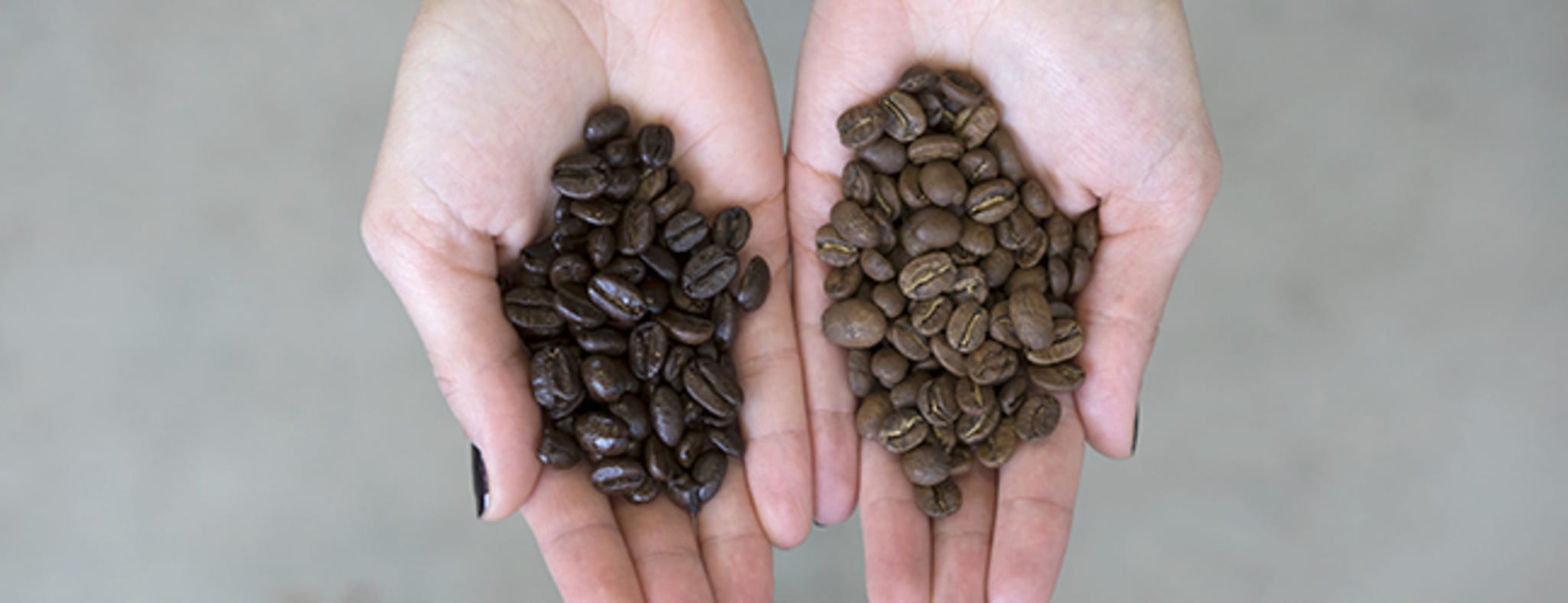
Light roast beans are pale brown – almost cinnamon-coloured – with no visible oil on the surface. The darkest roasted beans are nearly black and noticeably oily. Medium roast sits somewhere in between.
“Chemists working with coffee have determined that around 10% of green coffee’s weight is comprised of organic acids, that’s quite a lot!”
“Thousands of flavour creating reactions occur during the roasting process, and it’s our job to find an expression of that coffee which showcases vibrancy and terroir while still being soluble and approachable to brew.”
Richard Hill, Pact Coffee Quality Manager who has ten years of experience roasting coffee.