Best cafetiere coffee: how to choose, grind, and brew it Best cafetiere coffee: how to choose, grind, and brew it Did you know
Did you know

Best cafetiere coffee: how to choose, grind, and brew it

Will Sowerby

Written by Will Sowerby / Views

Published - 05 August 2026

Key takeaways

  • A cafetière and a French press are the same thing – a full-immersion brewer that steeps ground coffee in hot water before you press down a mesh filter.
  • Coarse-ground coffee is best for a cafetière, because the long steep and metal filter reward a slow, even extraction and leave far less sediment in the cup.
  • Speciality coffee suits the cafetière beautifully – the clean, unhurried brew gives flavour and natural sweetness room to show through.
  • If you’d rather not grind at home, Pact can grind your beans coarse for a cafetière before we post them, so your coffee arrives ready to brew.

The cafetière is one of the simplest ways to make a proper cup of coffee at home. But the results you get depend almost entirely on two things: the coffee you put in, and how coarsely it’s ground.

Get those right and a cafetière rewards you with a full-bodied, satisfying cup. Get them wrong and you’re left with something bitter and gritty.

Here’s how to choose the best coffee for a cafetière, why a coarser grind makes such a difference, and how to brew it well.

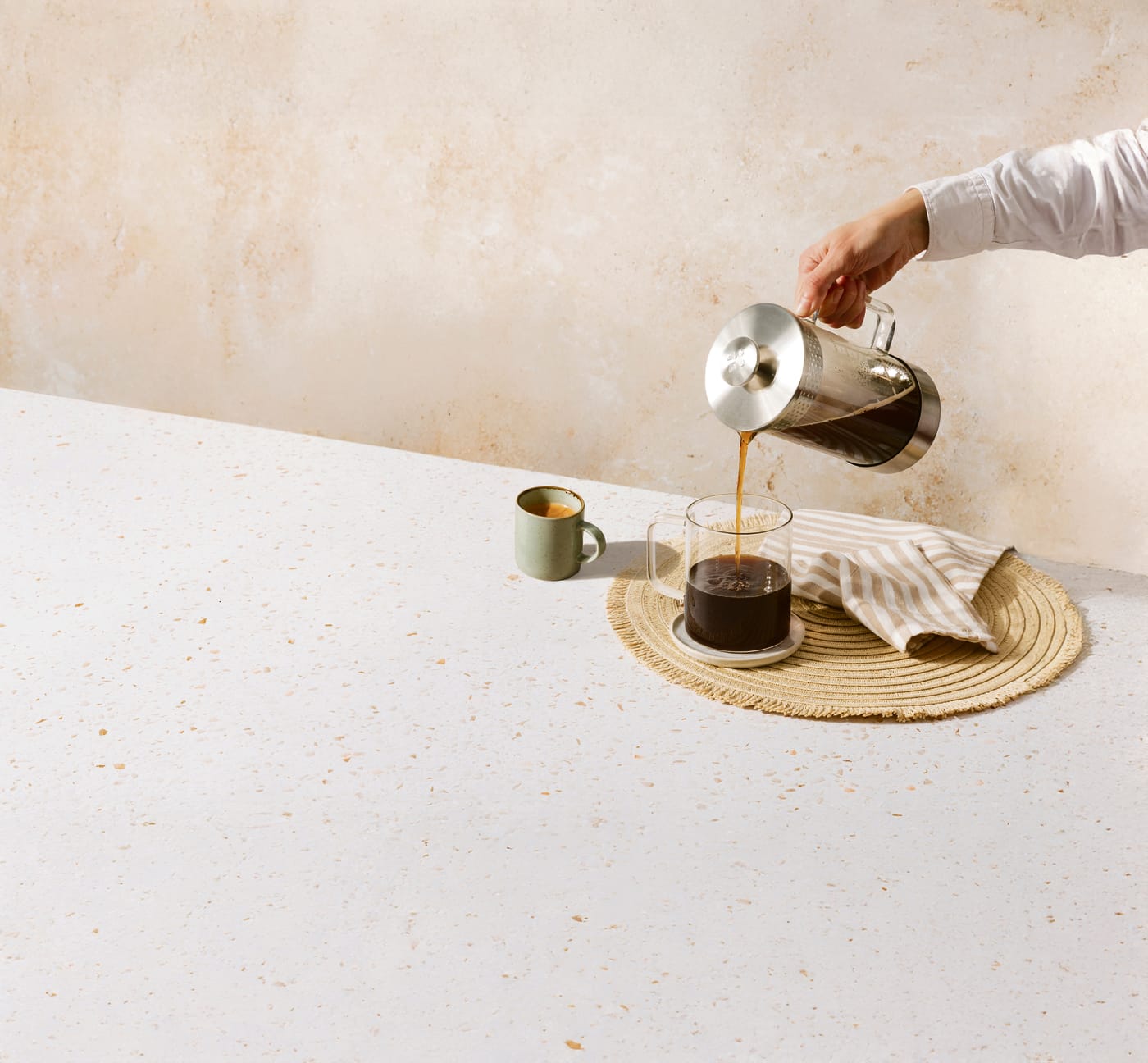
Brewing Fazenda Reis with a cafetière

What is a cafetière, and how does it work?

A cafetière – also called a French press – is a full-immersion brewer. You add coarse coffee grounds, pour over hot water, let everything steep together for a few minutes, then push a metal mesh plunger down to separate the grounds from the liquid.

That’s the whole method, and it’s why so many people love it. There’s no paper filter to catch the coffee’s natural oils, so you get a fuller body and more of the flavour the darker roast has to offer.

The flip side is that a cafetière is less forgiving than a paper-filter machine – with nothing to trap stray grounds or smooth things over, the grind you use really matters, which is exactly where grind size comes in.

Why a coarser grind works better for a cafetière

If you take one thing away, make it this: a cafetière needs a coarse grind, roughly the texture of sea salt or coarse breadcrumbs.

There are two reasons.

First, extraction. In a cafetière, the coffee and water sit together for around four minutes – far longer than the few seconds water spends passing through an espresso machine.

Finely ground coffee has a huge amount of surface area, so over that long steep it over-extracts, pulling out the harsh, bitter compounds that come late in the process.

A coarser grind has less surface area, so it extracts more slowly and evenly, giving you a balanced, sweeter cup by the time you press the plunger.

Second, the filter. A cafetière’s mesh is designed to hold back coarse grounds, not fine particles.

Grind too fine and the smaller pieces slip straight through into your cup, leaving grit on your tongue and a layer of sludge at the bottom of the mug.

Fine grounds also clog the mesh, so you end up forcing the plunger down against real resistance. A coarse grind stays where it belongs – above the filter – for a cleaner, smoother brew and an easy plunge.

This is why lots of ground coffee often disappoints in a cafetière: it’s usually ground medium for filter machines, which is too fine to work well here.

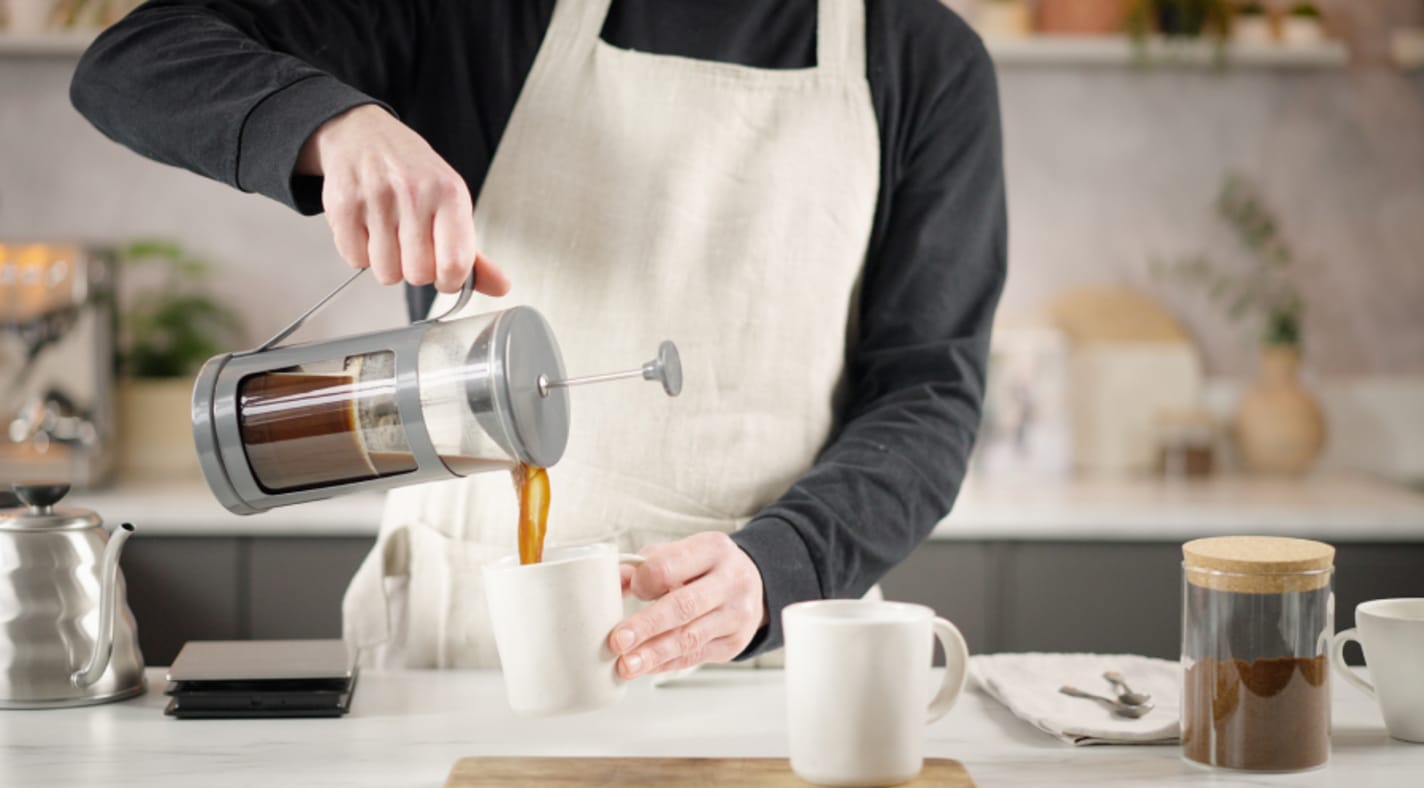
Pouring coffee from a cafetière

Let Pact grind it for you

Grinding fresh at home is ideal, but not everyone has a grinder – and getting a consistent coarse grind by hand takes a decent burr grinder to do well.

So we can do it for you. When you order coffee from Pact, just tell us you’re brewing in a cafetière and we’ll grind it coarse before we roast to order and post it out, so it arrives ready to brew straight from the bag.

It’s the easiest way to get a proper coarse grind without buying any kit.

If you do have a grinder at home, wholebean is still the freshest option – grind just before you brew.

Why speciality coffee is best for a cafetière

A cafetière is an honest brewer. With no paper filter smoothing things out and a long, gentle steep, it lays a coffee’s character bare – for better or worse.

That makes it a brewer that really rewards speciality coffee, and a fairly unforgiving home for anything mass-produced.

Speciality coffee is graded for quality and, in the right hands, roasted with care, which means more clarity in the cup and the kind of natural sweetness and depth that a cafetière draws out so well.

The clean cup you get from a good coarse grind gives all of that room to breathe.

A lot of that quality is set long before the coffee reaches your kitchen. The growers we work with put enormous skill into how they cultivate, pick, and process their coffee, and that craft is what gives each bag its distinct flavour – the reason one coffee tastes of chocolate and dried fruit while another leans bright and citrusy.

We roast every batch to order to protect that flavour, then get it to you fresh. Sourcing it fairly and sustainably is simply how we work – but the reason it tastes so good in your cafetière is the care that goes into growing and roasting it.

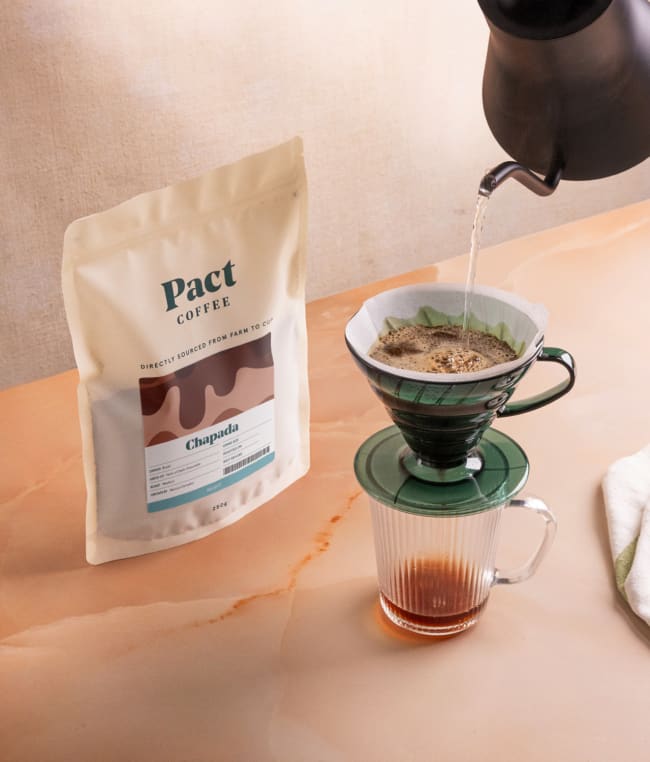
Brewing Terras Altas with a cafetière

The best supermarket coffee for a cafetière: Pact in Waitrose

You don’t necessarily have to order online to drink genuinely outstanding coffee.

The same speciality coffee we’re known for is on the shelf in Waitrose, so you can pick some up in your weekly shop, rather than settling for the tasteless tins that never quite work in a cafetière.

How to make cafetière coffee

Once you’ve got the right coffee and a coarse grind, the method is easy:

  • Use roughly 60g of coffee to a litre of water – about a rounded tablespoon per mug – then adjust to taste.
  • Add the ground coffee to the cafetière and pour over water that’s just off the boil, around 92–96°C.
  • Give it a gentle stir, pop the lid on with the plunger raised, and leave it to steep for four minutes.
  • Press the plunger down slowly and evenly, then pour straight away so the coffee doesn’t keep extracting.

If your cup tastes bitter, grind a touch coarser or steep for slightly less time. If it tastes thin or sour, use a little more coffee or let it steep a moment longer.

Buy Pact in Waitrose

Ready to upgrade your cafetière? You’ll find Pact in Waitrose, both in store and online, so it’s easy to add a bag to your next shop.

Look out for our Colombia Single-origin. Because it’s grown on a single estate, rather than blended from many, it has a consistent, clearly defined character in the cup – the kind of clarity that comes through beautifully in a cafetière.

Its balanced, rounded profile makes it a reliable, satisfying choice to brew this way.

Pick up a bag on your next Waitrose visit, or order it online, and taste the difference the right coffee makes.

FAQs

What grind is best for a cafetière?

A coarse grind, roughly the texture of sea salt or coarse breadcrumbs. It extracts evenly over the long steep and stays above the mesh filter, giving you a cleaner cup with less sediment.

Coffee ground for filter machines is usually too fine and turns bitter and gritty in a cafetière.

How much coffee do I use in a cafetière?

A good starting point is about 60g of coffee to a litre of water – roughly a rounded tablespoon per mug. From there, use a bit more for a stronger cup or a little less for a lighter one.

How long should coffee steep in a cafetière?

Around four minutes. Pour water just off the boil, stir gently, put the lid on, and leave it before pressing the plunger. Pour it out straight after plunging so it doesn’t keep extracting and turn bitter.

Is a cafetière the same as a French press?

Yes. ‘Cafetière’ and ‘French press’ are two names for the same full-immersion brewer – it works the same way whichever you call it.

Can I use supermarket ground coffee in a cafetière?

You can, but check the grind. Most standard ground coffee is ground fairly fine for filter machines, which over-extracts and leaves sediment in a cafetière.

For the best cafetière cup, go coarse: order online and we’ll grind it that way, or grind whole beans on a coarse setting at home.

What’s the best coffee for a cafetière overall?

A freshly roasted speciality coffee, ground coarse.

The cafetière’s clean, full-immersion brew shows off quality and sweetness, so the better the coffee going in, the better the cup coming out. Our Colombia Single-origin is a great place to start.

Best cafetiere coffee: how to choose, grind, and brew it

Will Sowerby

Written by Will Sowerby

Views

Published - 05 August 2026

Key takeaways

  • A cafetière and a French press are the same thing – a full-immersion brewer that steeps ground coffee in hot water before you press down a mesh filter.
  • Coarse-ground coffee is best for a cafetière, because the long steep and metal filter reward a slow, even extraction and leave far less sediment in the cup.
  • Speciality coffee suits the cafetière beautifully – the clean, unhurried brew gives flavour and natural sweetness room to show through.
  • If you’d rather not grind at home, Pact can grind your beans coarse for a cafetière before we post them, so your coffee arrives ready to brew.

The cafetière is one of the simplest ways to make a proper cup of coffee at home. But the results you get depend almost entirely on two things: the coffee you put in, and how coarsely it’s ground.

Get those right and a cafetière rewards you with a full-bodied, satisfying cup. Get them wrong and you’re left with something bitter and gritty.

Here’s how to choose the best coffee for a cafetière, why a coarser grind makes such a difference, and how to brew it well.

Brewing Fazenda Reis with a cafetière

What is a cafetière, and how does it work?

A cafetière – also called a French press – is a full-immersion brewer. You add coarse coffee grounds, pour over hot water, let everything steep together for a few minutes, then push a metal mesh plunger down to separate the grounds from the liquid.

That’s the whole method, and it’s why so many people love it. There’s no paper filter to catch the coffee’s natural oils, so you get a fuller body and more of the flavour the darker roast has to offer.

The flip side is that a cafetière is less forgiving than a paper-filter machine – with nothing to trap stray grounds or smooth things over, the grind you use really matters, which is exactly where grind size comes in.

Why a coarser grind works better for a cafetière

If you take one thing away, make it this: a cafetière needs a coarse grind, roughly the texture of sea salt or coarse breadcrumbs.

There are two reasons.

First, extraction. In a cafetière, the coffee and water sit together for around four minutes – far longer than the few seconds water spends passing through an espresso machine.

Finely ground coffee has a huge amount of surface area, so over that long steep it over-extracts, pulling out the harsh, bitter compounds that come late in the process.

A coarser grind has less surface area, so it extracts more slowly and evenly, giving you a balanced, sweeter cup by the time you press the plunger.

Second, the filter. A cafetière’s mesh is designed to hold back coarse grounds, not fine particles.

Grind too fine and the smaller pieces slip straight through into your cup, leaving grit on your tongue and a layer of sludge at the bottom of the mug.

Fine grounds also clog the mesh, so you end up forcing the plunger down against real resistance. A coarse grind stays where it belongs – above the filter – for a cleaner, smoother brew and an easy plunge.

This is why lots of ground coffee often disappoints in a cafetière: it’s usually ground medium for filter machines, which is too fine to work well here.

Pouring coffee from a cafetière

Let Pact grind it for you

Grinding fresh at home is ideal, but not everyone has a grinder – and getting a consistent coarse grind by hand takes a decent burr grinder to do well.

So we can do it for you. When you order coffee from Pact, just tell us you’re brewing in a cafetière and we’ll grind it coarse before we roast to order and post it out, so it arrives ready to brew straight from the bag.

It’s the easiest way to get a proper coarse grind without buying any kit.

If you do have a grinder at home, wholebean is still the freshest option – grind just before you brew.

Why speciality coffee is best for a cafetière

A cafetière is an honest brewer. With no paper filter smoothing things out and a long, gentle steep, it lays a coffee’s character bare – for better or worse.

That makes it a brewer that really rewards speciality coffee, and a fairly unforgiving home for anything mass-produced.

Speciality coffee is graded for quality and, in the right hands, roasted with care, which means more clarity in the cup and the kind of natural sweetness and depth that a cafetière draws out so well.

The clean cup you get from a good coarse grind gives all of that room to breathe.

A lot of that quality is set long before the coffee reaches your kitchen. The growers we work with put enormous skill into how they cultivate, pick, and process their coffee, and that craft is what gives each bag its distinct flavour – the reason one coffee tastes of chocolate and dried fruit while another leans bright and citrusy.

We roast every batch to order to protect that flavour, then get it to you fresh. Sourcing it fairly and sustainably is simply how we work – but the reason it tastes so good in your cafetière is the care that goes into growing and roasting it.

Brewing Terras Altas with a cafetière

The best supermarket coffee for a cafetière: Pact in Waitrose

You don’t necessarily have to order online to drink genuinely outstanding coffee.

The same speciality coffee we’re known for is on the shelf in Waitrose, so you can pick some up in your weekly shop, rather than settling for the tasteless tins that never quite work in a cafetière.

How to make cafetière coffee

Once you’ve got the right coffee and a coarse grind, the method is easy:

  • Use roughly 60g of coffee to a litre of water – about a rounded tablespoon per mug – then adjust to taste.
  • Add the ground coffee to the cafetière and pour over water that’s just off the boil, around 92–96°C.
  • Give it a gentle stir, pop the lid on with the plunger raised, and leave it to steep for four minutes.
  • Press the plunger down slowly and evenly, then pour straight away so the coffee doesn’t keep extracting.

If your cup tastes bitter, grind a touch coarser or steep for slightly less time. If it tastes thin or sour, use a little more coffee or let it steep a moment longer.

Buy Pact in Waitrose

Ready to upgrade your cafetière? You’ll find Pact in Waitrose, both in store and online, so it’s easy to add a bag to your next shop.

Look out for our Colombia Single-origin. Because it’s grown on a single estate, rather than blended from many, it has a consistent, clearly defined character in the cup – the kind of clarity that comes through beautifully in a cafetière.

Its balanced, rounded profile makes it a reliable, satisfying choice to brew this way.

Pick up a bag on your next Waitrose visit, or order it online, and taste the difference the right coffee makes.

FAQs

What grind is best for a cafetière?

A coarse grind, roughly the texture of sea salt or coarse breadcrumbs. It extracts evenly over the long steep and stays above the mesh filter, giving you a cleaner cup with less sediment.

Coffee ground for filter machines is usually too fine and turns bitter and gritty in a cafetière.

How much coffee do I use in a cafetière?

A good starting point is about 60g of coffee to a litre of water – roughly a rounded tablespoon per mug. From there, use a bit more for a stronger cup or a little less for a lighter one.

How long should coffee steep in a cafetière?

Around four minutes. Pour water just off the boil, stir gently, put the lid on, and leave it before pressing the plunger. Pour it out straight after plunging so it doesn’t keep extracting and turn bitter.

Is a cafetière the same as a French press?

Yes. ‘Cafetière’ and ‘French press’ are two names for the same full-immersion brewer – it works the same way whichever you call it.

Can I use supermarket ground coffee in a cafetière?

You can, but check the grind. Most standard ground coffee is ground fairly fine for filter machines, which over-extracts and leaves sediment in a cafetière.

For the best cafetière cup, go coarse: order online and we’ll grind it that way, or grind whole beans on a coarse setting at home.

What’s the best coffee for a cafetière overall?

A freshly roasted speciality coffee, ground coarse.

The cafetière’s clean, full-immersion brew shows off quality and sweetness, so the better the coffee going in, the better the cup coming out. Our Colombia Single-origin is a great place to start.