Is the coffee industry equal for men and women? Is the coffee industry equal for men and women? Coffee industry news
Coffee industry news

Is the coffee industry equal for men and women?

Pact Coffee

Written by Pact Coffee / Views

Published - 18 February 2026

Key takeaways

  • Women make up around 70% of the global coffee workforce, but just 20% of farms are owned or run by them. 

  • Women who run farms still face significantly less access to land, finance, and training than men.

  • Addressing the imbalance between men and women in coffee brings more people to the table to increase coffee quality and further sustainability initiatives.

  • Pact Coffee is celebrating International Women’s Day 2026 by sourcing 100% of its core coffee range in March from women and gender-equity groups.

Why is the coffee industry unequal?

Even today, the coffee industry remains far from equal, and there’s a significant gap between work and ownership. 

While women provide the vast majority (an estimated 70%) of the labour in coffee production, including picking, sorting, and processing, only around 20% of farms are run or owned by them. 

Even if women run the farm, they typically still have significantly less access to land ownership, finance, resources, and training than their male countets.

Unless this is addressed, the gender equity gap in the coffee industry will only expand.

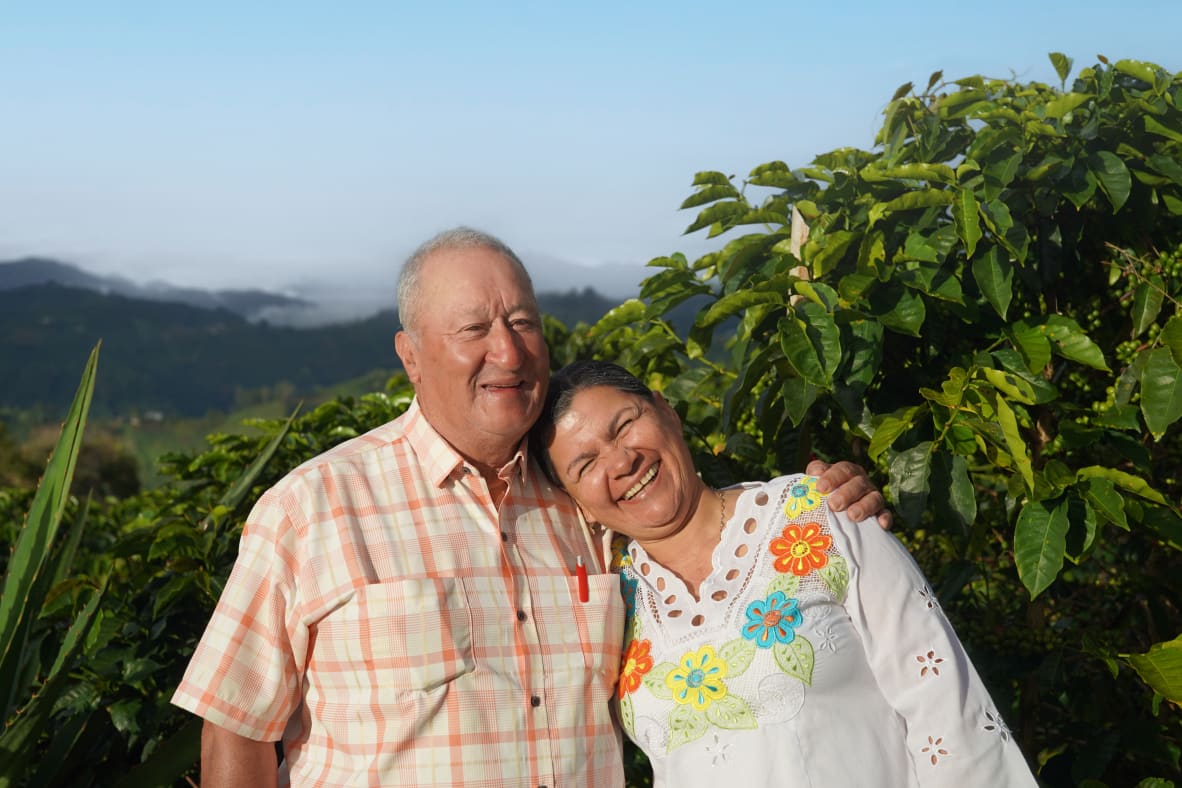
Maria Del Rosario, grower and co-owner of the Buenos Aires farm in Colombia.

What problems do women face in the coffee industry?

Women coffee growers rarely just grow coffee. In many coffee-producing countries, they’re typically responsible for the vast majority of domestic work, including childcare, cooking, and water collection. 

This means women have less time to attend technical training sessions and meetings, manage the farm, or participate in cooperative activities than men. Without this, they miss out on vital education on new pest-control methods and climate-adaptation techniques. 

With less access to both education and credit, women are often the last to implement climate-adapted agricultural techniques, like irrigation systems or shade-growing techniques, leading to a loss of yield (less coffee produced on their coffee farm) and, ultimately, a loss of profit.

Do women make as much money from coffee as men?

Because women are often excluded from formal cooperatives and have less access to transportation, they frequently rely on local middlemen to sell their cherries – these are often known as ‘coyotes’. This is particularly common in Latin America.

These middlemen often pay women significantly less than the actual market value because they know they have no other way to get their product to a larger mill. 

As they have less access to finance, education, and cooperatives, women are also less likely to reach the international market with their coffee. This puts a significant ceiling on their earning potential.

If a coffee made by a woman does reach the international market, it’s regularly without her name or the name of her farm – simply labeled by its country or region of origin – regardless of the skill and dedication of the grower behind it.

Maria Bercelia, grower and owner of the Los Ángeles farm in Colombia.

What can be done to tackle inequality in the coffee industry?

Tackling inequality in coffee requires that roasters move past marketing slogans and into intentional sourcing. For us, that means directing trade specifically toward women-led farms. 

By providing the financial backing necessary to access the international market, we aren’t just ‘helping’ – we’re ensuring that exceptional coffee, which has historically been overlooked, gets the premium it deserves.

For many of these women, this is the first time they reach the international market, putting their excellent work on the radar of the wider specialty coffee community and bringing more potential buyers to their coffee. 

So for the entirety of March 2026, 100% of our core range will be coffee grown by women or gender-equity groups. That’s an estimated 45,000kg of coffee grown on more than 20 woman-run farms. 

Moving past this, a minimum of 50% of Pact coffee will be sourced from women or gender-equity groups – we believe it’s only through our sourcing strategy, and our financial backing, that we can work towards a truly equal coffee industry.

How can coffee grown by women reach the international market?

For many women in coffee, having their coffee roasted and sold abroad comes with a lot of adversity, and it’s very difficult to accomplish alone.

Women’s groups in coffee-producing countries can support women in coffee by offering them access to agronomic and technical training, strength through collective negotiation, peer advice on improving coffee quality, and connection to international buyers.

We work with Cafeína Group, a collective of 1900+ exceptional women coffee growers founded in 2019 to give women rightful visibility in the Brazilian coffee industry – where they’re all too often denied a voice when key decisions are being made and overshadowed by men.

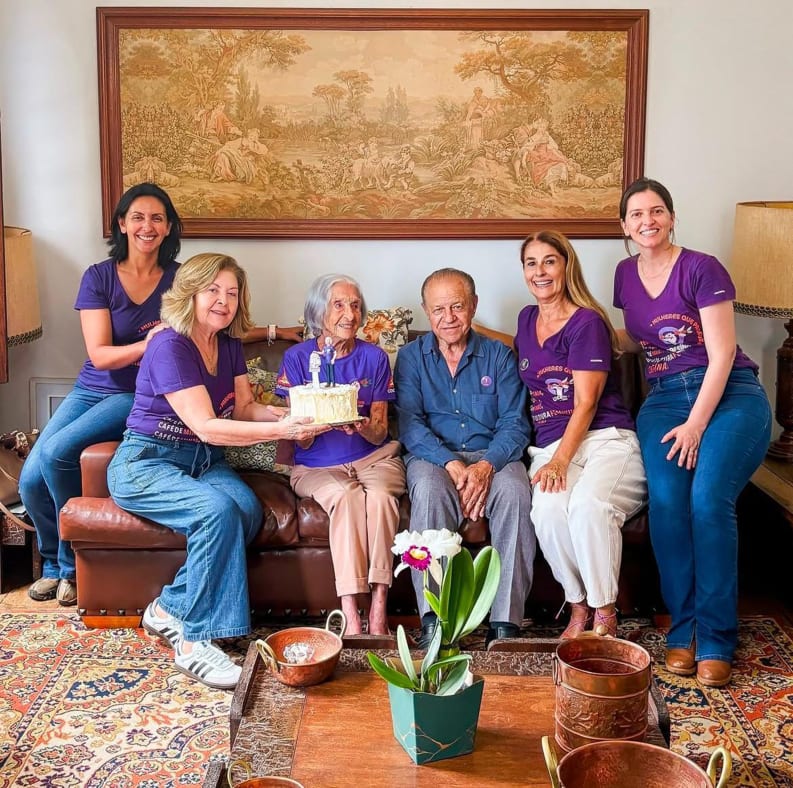
At 103 years old, Dona Henriqueta is the oldest member of the collective. We’ve been proud to have her coffee, Cafeína Prazeres, on our menu every year for the past three years – a testament to a lifetime of dedication that has been far too often overlooked by the wider industry.

quotes
“The creation of Cafeína Group was something truly special: my coffee was recognised as my own, and the work of my lifetime was finally seen".
Henriqueta Miranda, who has grown coffee in Brazil for more than 50 years.
Dona Henriqueta celebrating her 103rd birthday with members of Cafeína Group.

We’re also partnering with the Mirtayu Coffee Program in Huila, Colombia. This initiative is built on a simple, honest principle: when women are paid directly for their skill, entire communities thrive. 

We work with the Coffee Committee of the National Federation of Coffee Growers (FNC) to ensure these growers receive a specific premium for their harvests. 

This transparency ensures that the value of the coffee goes exactly where it can do the most good: funding education, improving household nutrition, and strengthening the family unit.

Our Director of Coffee, Will, with members of Mirtayu Coffee Program.

How is Pact Coffee working for gender equity in the coffee industry?

For the entirety of March, every single bag in our core range will come from a woman-run farm or gender-equity group. That’s approximately 45,000kg of exceptional coffee that will have the name of the woman who grew it front and centre on its packaging.

This isn’t just for International Women’s Day. Moving forward, we pledge to source a minimum of 50% of all Pact coffee from women or gender-equity groups. 

We believe that intentional sourcing, and financial backing, is the only way to build a coffee industry that is truly equal.

Q&A

Is the coffee industry equal for men and women?

No. Women make up around 70% of the global coffee workforce, but just 20% of farms are owned or run by them. 

What problems do women face in the coffee industry?

Women typically have less access to finance, education, and the international market than their male counterparts. 

What can be done to tackle the problem of inequality in the coffee industry? 

Roasters need to move past slogans and marketing buzzwords to purchase intentionally, paying a truly fair price to talented women in coffee and shining a spotlight on their work.

Is the coffee industry equal for men and women?

Pact Coffee

Written by Pact Coffee

Views

Published - 18 February 2026

Key takeaways

  • Women make up around 70% of the global coffee workforce, but just 20% of farms are owned or run by them. 

  • Women who run farms still face significantly less access to land, finance, and training than men.

  • Addressing the imbalance between men and women in coffee brings more people to the table to increase coffee quality and further sustainability initiatives.

  • Pact Coffee is celebrating International Women’s Day 2026 by sourcing 100% of its core coffee range in March from women and gender-equity groups.

Why is the coffee industry unequal?

Even today, the coffee industry remains far from equal, and there’s a significant gap between work and ownership. 

While women provide the vast majority (an estimated 70%) of the labour in coffee production, including picking, sorting, and processing, only around 20% of farms are run or owned by them. 

Even if women run the farm, they typically still have significantly less access to land ownership, finance, resources, and training than their male countets.

Unless this is addressed, the gender equity gap in the coffee industry will only expand.

Maria Del Rosario, grower and co-owner of the Buenos Aires farm in Colombia.

What problems do women face in the coffee industry?

Women coffee growers rarely just grow coffee. In many coffee-producing countries, they’re typically responsible for the vast majority of domestic work, including childcare, cooking, and water collection. 

This means women have less time to attend technical training sessions and meetings, manage the farm, or participate in cooperative activities than men. Without this, they miss out on vital education on new pest-control methods and climate-adaptation techniques. 

With less access to both education and credit, women are often the last to implement climate-adapted agricultural techniques, like irrigation systems or shade-growing techniques, leading to a loss of yield (less coffee produced on their coffee farm) and, ultimately, a loss of profit.

Do women make as much money from coffee as men?

Because women are often excluded from formal cooperatives and have less access to transportation, they frequently rely on local middlemen to sell their cherries – these are often known as ‘coyotes’. This is particularly common in Latin America.

These middlemen often pay women significantly less than the actual market value because they know they have no other way to get their product to a larger mill. 

As they have less access to finance, education, and cooperatives, women are also less likely to reach the international market with their coffee. This puts a significant ceiling on their earning potential.

If a coffee made by a woman does reach the international market, it’s regularly without her name or the name of her farm – simply labeled by its country or region of origin – regardless of the skill and dedication of the grower behind it.

Maria Bercelia, grower and owner of the Los Ángeles farm in Colombia.

What can be done to tackle inequality in the coffee industry?

Tackling inequality in coffee requires that roasters move past marketing slogans and into intentional sourcing. For us, that means directing trade specifically toward women-led farms. 

By providing the financial backing necessary to access the international market, we aren’t just ‘helping’ – we’re ensuring that exceptional coffee, which has historically been overlooked, gets the premium it deserves.

For many of these women, this is the first time they reach the international market, putting their excellent work on the radar of the wider specialty coffee community and bringing more potential buyers to their coffee. 

So for the entirety of March 2026, 100% of our core range will be coffee grown by women or gender-equity groups. That’s an estimated 45,000kg of coffee grown on more than 20 woman-run farms. 

Moving past this, a minimum of 50% of Pact coffee will be sourced from women or gender-equity groups – we believe it’s only through our sourcing strategy, and our financial backing, that we can work towards a truly equal coffee industry.
How can coffee grown by women reach the international market?

For many women in coffee, having their coffee roasted and sold abroad comes with a lot of adversity, and it’s very difficult to accomplish alone.

Women’s groups in coffee-producing countries can support women in coffee by offering them access to agronomic and technical training, strength through collective negotiation, peer advice on improving coffee quality, and connection to international buyers.

We work with Cafeína Group, a collective of 1900+ exceptional women coffee growers founded in 2019 to give women rightful visibility in the Brazilian coffee industry – where they’re all too often denied a voice when key decisions are being made and overshadowed by men.

At 103 years old, Dona Henriqueta is the oldest member of the collective. We’ve been proud to have her coffee, Cafeína Prazeres, on our menu every year for the past three years – a testament to a lifetime of dedication that has been far too often overlooked by the wider industry.

quotes
“The creation of Cafeína Group was something truly special: my coffee was recognised as my own, and the work of my lifetime was finally seen".
Henriqueta Miranda, who has grown coffee in Brazil for more than 50 years.
Dona Henriqueta celebrating her 103rd birthday with members of Cafeína Group.

We’re also partnering with the Mirtayu Coffee Program in Huila, Colombia. This initiative is built on a simple, honest principle: when women are paid directly for their skill, entire communities thrive. 

We work with the Coffee Committee of the National Federation of Coffee Growers (FNC) to ensure these growers receive a specific premium for their harvests. 

This transparency ensures that the value of the coffee goes exactly where it can do the most good: funding education, improving household nutrition, and strengthening the family unit.

Our Director of Coffee, Will, with members of Mirtayu Coffee Program.

How is Pact Coffee working for gender equity in the coffee industry?

For the entirety of March, every single bag in our core range will come from a woman-run farm or gender-equity group. That’s approximately 45,000kg of exceptional coffee that will have the name of the woman who grew it front and centre on its packaging.

This isn’t just for International Women’s Day. Moving forward, we pledge to source a minimum of 50% of all Pact coffee from women or gender-equity groups. 

We believe that intentional sourcing, and financial backing, is the only way to build a coffee industry that is truly equal.

Q&A

Is the coffee industry equal for men and women?

No. Women make up around 70% of the global coffee workforce, but just 20% of farms are owned or run by them. 

What problems do women face in the coffee industry?

Women typically have less access to finance, education, and the international market than their male counterparts. 

What can be done to tackle the problem of inequality in the coffee industry? 

Roasters need to move past slogans and marketing buzzwords to purchase intentionally, paying a truly fair price to talented women in coffee and shining a spotlight on their work.